
Electrician Career Outcomes
Electrician Career Outcomes
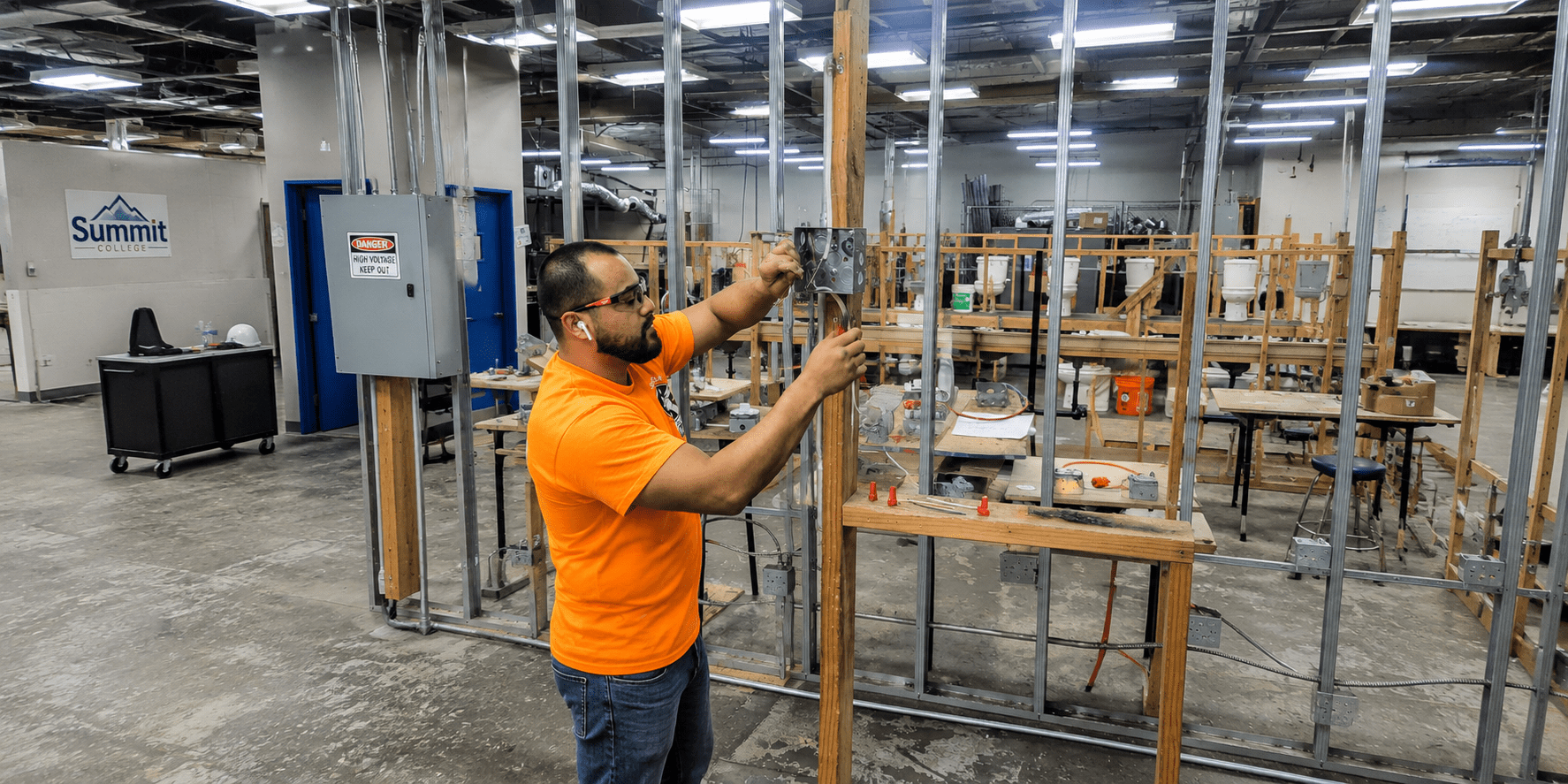
What You Can Do After Electrician Training at Ðǿմ«ý
If you’re considering electrician training, you’re probably thinking:
“What kind of work does this actually lead to?”
This page breaks it down clearly—what jobs you can get, what the work looks like, and how the path develops over time.
What Jobs Can You Get After Electrician Training?
Most graduates start in entry-level electrical roles, where they gain experience while working alongside licensed electricians.
Common starting positions include:
- Electrician Apprentice
- Electrical Helper
- Construction Electrician Trainee
- Maintenance Technician
- Residential Wiring Technician
These roles are hands-on and focused on building real job-site experience.
Early in your career, the work is practical and skill-based.
A typical day might include:
- Installing wiring and electrical systems
- Reading blueprints and technical diagrams
- Assisting with panel upgrades and circuit installations
- Troubleshooting electrical issues
- Using tools like conduit benders, multimeters, and hand tools
You’re working on systems people rely on every day.
Where Do Electricians Work?
Electricians are needed anywhere power is used.
Common work environments include:
- Residential homes
- Commercial buildings
- Construction sites
- Industrial facilities
- Maintenance departments
Some electricians focus on installation. Others specialize in repair, maintenance, or systems work.
Career Growth: Where This Can Lead
Electrician is a structured trade with clear progression.
A typical path looks like:
- Training Program
- Entry-Level Role / Apprentice
- Skilled Electrician
- Licensed Electrician
- Specialized or Independent Work
Over time, you may move into:
- Commercial electrical systems
- Industrial maintenance
- Low-voltage or data systems
- Renewable energy (solar)
This is a trade where experience builds into higher responsibility and higher pay.
How This Leads Toward Licensing
In California, electricians typically become licensed after gaining work experience and meeting state requirements.
Training helps you:
- Learn core electrical skills
- Understand systems and safety practices
- Enter the workforce prepared
From there, you build the hours needed to qualify for licensing.
How Ðǿմ«ý Supports Your Career Path
A common question is:
“Will this actually help me get started working?”
Ðǿմ«ý focuses on helping you move from training into the field.
Support may include:
- Career services assistance
- Resume and interview preparation
- Guidance on entry-level job opportunities
- Employer connections in your area
The goal is to help you take the next step with direction.
This path tends to work well if you:
- Prefer hands-on work over desk work
- Want a skill that leads to steady employment
- Are comfortable working with tools and systems
- Are looking for a path that builds over time
If you’re looking for something abstract or unpredictable, this probably isn’t it.
Do I Need Experience to Get Started As An Electrician?
No. Entry-level roles are designed for people learning the trade.
Is Electrician Work Physically Demanding?
It can be. You’ll be on your feet, using tools, and sometimes working in tight spaces.
Choosing the right career is important for your quality of life and fulfillment. Ðǿմ«ý’s Admission Advisors are here to assist you as you make your career choice. They give you guidance based on your strengths, financial potential, academic expectations, personality, and more. Taking a holistic approach to career matching will help you feel more confident that you’ve chosen the right career.
Can I Work While Training As An Electrician?
Many students do, depending on their schedule.
How Long Before I Can Advance?
With consistent work and skill development, many electricians see progression within a few years.
Take the Next Step
If you’re comparing options, you don’t need to decide today.
Start with better information:
- See what you’ll learn in electrician training
- Explore electrician career paths
- Talk to an advisor about your goals
Or explore training at a campus near you:
- San Bernardino
- El Cajon (San Diego)
- Santa Ana (Orange County)
Bottom Line
Electrician training isn’t about going back to school.
It’s about learning a skill that:
- Pays
- Lasts
- Builds over time
If that’s what you’re looking for, this path is worth a closer look.

