
HVAC Career Outcomes
HVAC Career Outcomes
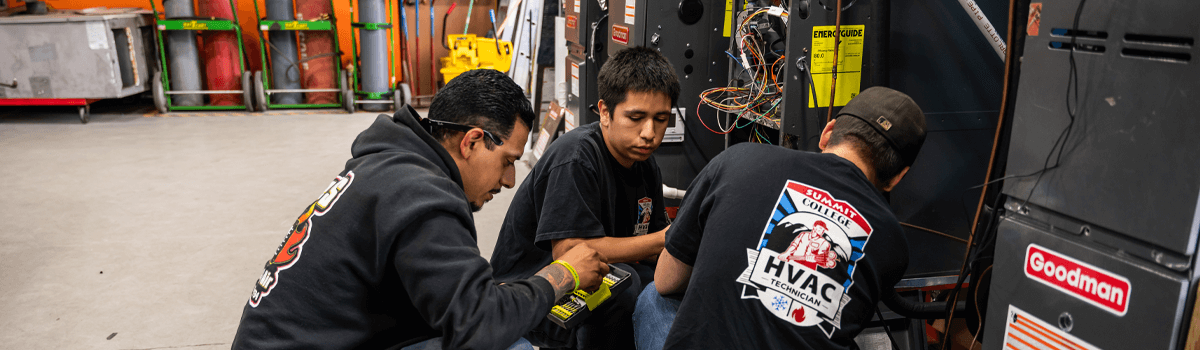
What You Can Do After HVAC Training at Ðǿմ«ý
If you’re looking into HVAC training, you’re probably thinking:
“What kind of work does this actually lead to, and can I handle it?”
This page gives you a clear breakdown: the jobs, the work itself, and how the path develops over time.
What Jobs Can You Get After HVAC Training?
Most graduates start in entry-level HVAC roles, building experience with real systems under supervision.
Common starting positions include:
- HVAC Technician Trainee
- HVAC Installer Helper
- Maintenance Technician
- Residential HVAC Installer
- Service Technician Assistant
These roles focus on learning systems in the field, not just theory.
What Does an Entry-Level HVAC Technician Actually Do?
HVAC work is about understanding systems, and fixing them when they don’t work.
A typical day might include:
- Installing heating and cooling systems
- Troubleshooting air conditioning or furnace issues
- Performing routine maintenance and inspections
- Working with electrical components and refrigerants
- Reading system diagrams and schematics
You’re not just fixing things, you’re figuring out how systems operate.
Where Do HVAC Technicians Work?
HVAC technicians are needed year-round.
Common work environments include:
- Residential homes
- Commercial buildings
- Office complexes
- Industrial facilities
- Maintenance and service companies
Heating and cooling systems don’t stop, so neither does the demand.
Career Growth: Where This Can Lead
HVAC is a technical trade with a clear progression:
- Training Program
- Entry-Level Technician
- Skilled Technician
- Certified Technician
- Specialist or Lead Technician
Over time, you may move into:
- System diagnostics and advanced troubleshooting
- Commercial HVAC systems
- Refrigeration
- Supervisory or lead roles
This path is ideal for people who want to move from general labor into technical, system-based work.
Certifications and Career Progression
HVAC careers often involve certifications such as:
- EPA Section 608 (required for handling refrigerants)
- Industry-recognized HVAC certifications
Training helps you prepare for these steps so you can enter the field with a foundation, not guesswork.
How Ðǿմ«ý Supports Your Career Path
A common question is:
“Will I actually be ready to work after this?”
Ðǿմ«ý focuses on helping you build job-ready skills and move into the field.
Support may include:
- Career services assistance
- Resume and interview preparation
- Guidance on entry-level job opportunities
- Employer connections in your area
The goal is to help you transition from training to real work.
Is HVAC the Right Fit for You?
This path tends to work well if you:
- Like understanding how systems work
- Enjoy problem-solving and diagnostics
- Want a technical skill without a 4-year degree
- Are comfortable learning step-by-step processes
If you prefer simple, repetitive work, HVAC may feel too technical.
Is HVAC Training Hard?
It can be challenging, especially at first, but it’s taught step by step.
Do I Need to be Good at Math?
Basic math helps, but you don’t need advanced math skills.
Can I work while training?
Many students do, depending on their schedule.
How Quickly Can I Advance?
With experience and certifications, growth can happen within a few years.
Take the Next Step
If you’re comparing options, you don’t need to decide today.
Start with better information:
- See what you’ll learn in HVAC training
- Explore HVAC career paths
- Talk to an advisor about your goals
Or explore training at a campus near you:
Bottom Line
HVAC training isn’t just about learning equipment.
It’s about learning systems, and becoming the person who knows how to fix them.
If that’s the direction you want to go, this path is worth a closer look.

